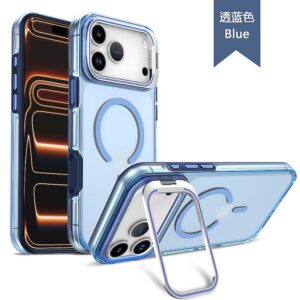
The phone case passed sampling.
It passed pilot production.
But after final assembly and drop testing, the product started cracking.
For any consumer electronics brand, this is one of the most dangerous types of quality failures:
Everything appears normal — until the finished product reaches real testing conditions.
Last year, our team supported a large US brand on a leather phone case project.
The internal PC shell used PC 2807 material with a finished thickness of 1.35mm.
After injection molding, lamination, leather wrapping, and final assembly, cracking started appearing during drop testing.
The first conclusion pointed toward injection molding conditions:
• Mold temperature too high
• Barrel temperature too high
• Material degradation during production
• Increased brittleness caused by MFR changes
However, based on our engineering and production experience, we believed the root cause was deeper than process temperature alone.
During sampling and pilot production, our engineering team had already raised concerns about the material compatibility for this product structure and post-processing method.
Because the product would undergo lamination, leather wrapping, adhesive stress, and repeated impact during use, we believed the selected material did not provide sufficient toughness stability for the final application.
At that stage, we suggested switching to a different PC grade.
However, since the material had already been specified within the project requirement, the proposal was not adopted.
Instead of debating responsibility, we chose to verify the issue through engineering testing.
Our team rebuilt the internal shell using PC 2407 material and conducted:
• Bending tests
• Steel ball impact tests
• Assembly stress verification
• Post-lamination drop testing
The result:
The cracking issue disappeared completely.
This project reinforced an important lesson in OEM manufacturing:
A material that works during sampling does not always work in final mass production conditions.
Especially for protective products, final reliability depends on the interaction between:
• Material toughness
• Injection molding stability
• Structural design
• Adhesive and lamination stress
• Assembly process
• Real-world impact conditions
True manufacturing capability is not about avoiding problems.
It is about identifying root causes, validating solutions through testing, and building products that remain reliable after every process is completed.
In many cases, the biggest risks are not visible during sampling —
they only appear after the entire manufacturing system starts working together.
For brands developing premium phone cases and tablet accessories, manufacturing success is not only about design — it is about understanding how materials, structure, and production processes work together in real-world conditions.
That is where experienced engineering support becomes critical.